How to Style Artificial Plants So They Look Real (7 Designer Tricks)
November 11, 2026 · 831 words · styling tips, interior design, artificial plants, decor
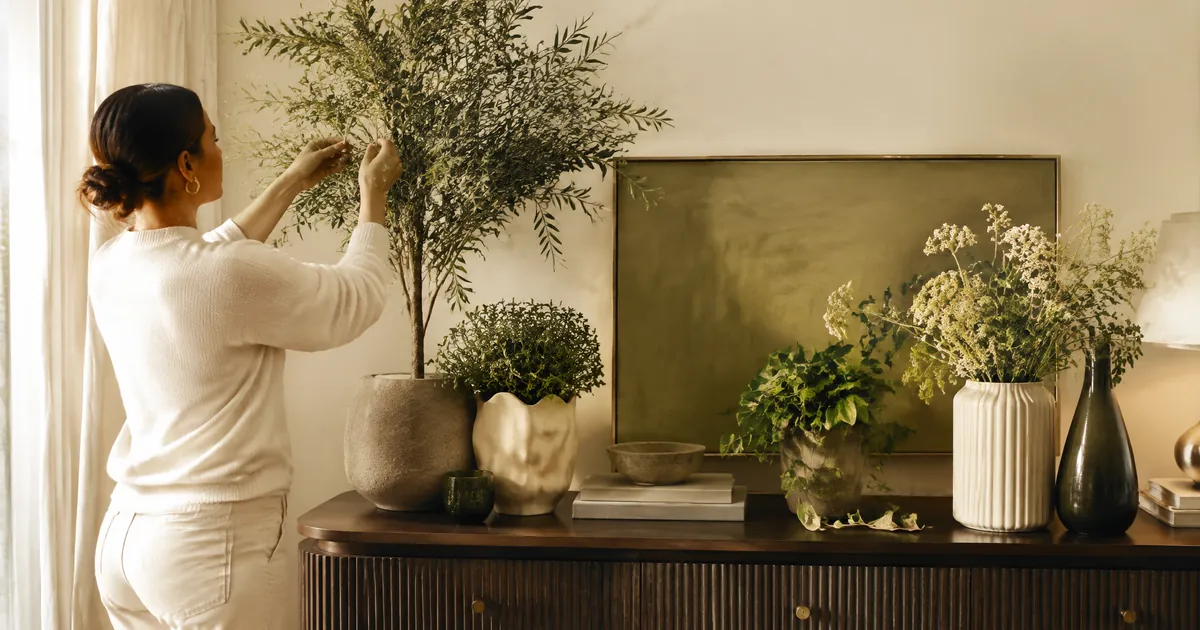
The difference between artificial plants that fool people and artificial plants that scream "plastic" usually comes down to styling, not the plant. Interior designers use a handful of repeatable tricks to make faux greenery read as real. Here are the seven that matter most.
1. Fluff and shape every plant on arrival
Shipped plants arrive compressed, and a compressed plant looks fake from across the room. Take ten minutes to bend each branch outward and slightly downward, separating leaves so light passes through the plant the way it does with live foliage. Perfect symmetry is the tell; real plants are a little irregular. Work from the trunk outward and step back every few branches to check the silhouette.
2. Style in odd numbers and varied heights
Group plants in threes or fives, mixing heights: one floor tree, one medium potted plant, one small trailing piece. Uniform height rows read as a store display. A tall cedar topiary beside a mid-height cypress and a small windowsill pine creates a natural staircase for the eye.
3. Upgrade the pot
The nursery pot is the single biggest giveaway. Drop the plastic liner into a ceramic, terracotta, woven basket or stoneware planter, and add moss or bark on top of the soil line. Our trees ship in finished black or rounded pots precisely so they can stand alone, but a pot swap is still the fastest luxury upgrade in styling.
4. Give plants a reason to be where they are
Real plants live near light, so place faux ones near windows, beside lamps, or under skylights even though they don't need the light. Your brain (and everyone else's) reads "plant by the window" as natural. A faux fern in a dark hallway reads as decor; the same fern on a bright windowsill reads as a plant.
Scale matters too: a plant that's too small for its spot looks like clutter no matter how real it looks. When in doubt between two sizes, the larger one usually styles better, which is why the multi-height spiral topiary and cedar tree pages list exact dimensions for every variant.
5. Layer greenery into existing groupings
Instead of giving each plant its own pedestal, tuck them into vignettes: a small pine between stacked books, trailing greenery off the edge of a shelf, stems in a vase with your real dried flowers. Mixing faux and real elements in one arrangement hides the artificial ones in plain sight.
6. Add imperfection on purpose
Rotate a plant slightly off-axis. Let one branch lean. Turn a few leaves upward and a few down. Real plants grow toward light and get brushed by traffic; a plant that is too geometric reads as manufactured. When you fluff, aim for "healthy and slightly wild," not "groomed."
6b. Anchor with a rug or mat underneath
Grounding a floor plant on a rug, mat or tray does something subtle but powerful: it ties the plant to the furniture group instead of letting it float like an afterthought. A cedar topiary on a jute mat by the sofa reads as part of the room; the same tree on bare floorboards reads as placed there five minutes ago. Porch plants get the same benefit from a coir doormat underneath.
7. Keep them clean
Dust is the final tell. A quick monthly pass with a microfiber cloth or a cool hairdryer setting keeps leaves matte and lifelike (our full cleaning routine is in the care guide). Dusty faux plants look like decor; clean ones look like plants.
Bonus: the two-minute mirror check
Before you call a room finished, stand where a guest would and glance at the plant in mirrors and windows. Reflections are where over-fluffed branches and bare backsides of plants get noticed. If a plant is visible from behind (on a console against a wall, for example), rotate its fullest side outward and consider a second, smaller plant to cover the gap. Designers style for every sightline, not just the front door view, and it takes less time than you'd think.
Styling mistakes to avoid
Just as useful as the tricks is knowing what undoes them. Avoid these four:
- Overcrowding: five plants crammed on one shelf look like inventory, not styling. Give each piece room to cast a shadow.
- Visible plastic soil: bare foam or plastic at the soil line is the fastest tell; cover it with moss, bark or stones.
- Perfect symmetry indoors: matching pairs belong at doors and porches. Inside a room, symmetry reads as staged.
- Ignoring the ceiling: a tall plant under a low shelf or light fixture looks cramped. Check headroom before you place a floor tree.
Putting it together
Start with one anchor plant per room, style it with the tricks above, and build outward. If you want a shortcut, our paired porch cedars handle the symmetry trick for you, and the spiral topiary brings the structured silhouette that modern rooms love. Browse the full collection and pick the shapes your rooms are missing.