How to Clean and Care for Artificial Plants (Keep Them Looking Fresh for Years)
November 11, 2026 · 756 words · plant care, cleaning tips, artificial plants, maintenance
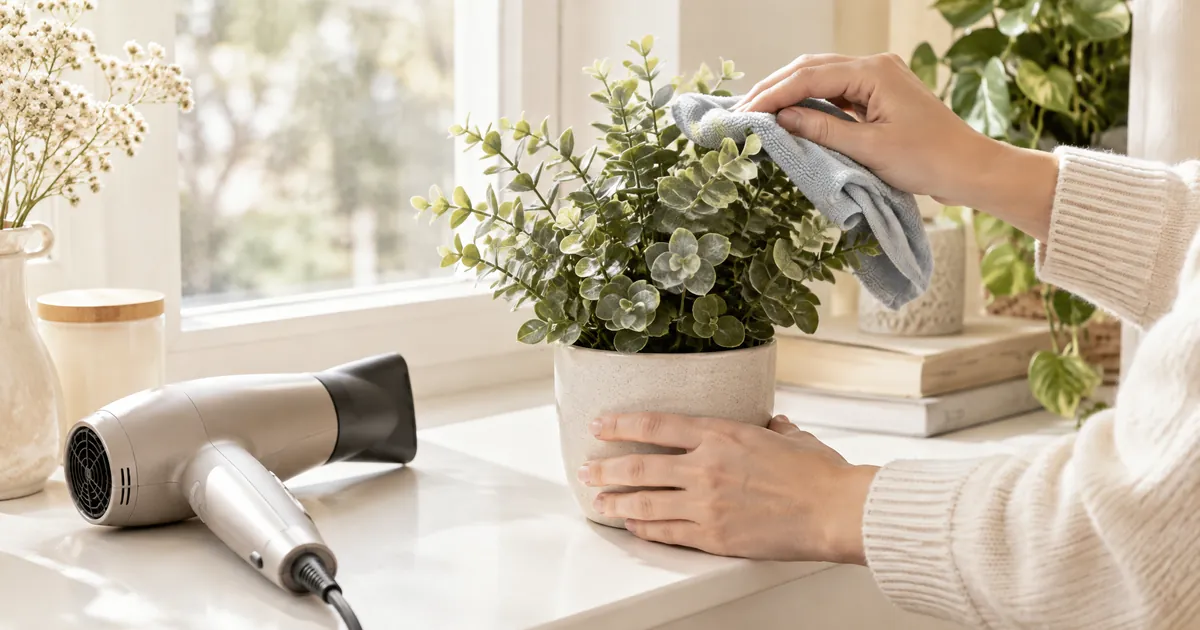
One of the best reasons to own artificial plants is that "care" takes minutes a month, not a weekly chore list. But faux greenery isn't zero-maintenance: dust settles, sun fades cheap materials, and storage can crush a good silhouette. Here's the routine that keeps artificial plants looking showroom-fresh for years.
Before the routine, one honest note: "care" for artificial plants is really about three enemies: dust, sun and clumsy storage. Every tip below targets one of them, and none of it takes more than a few minutes.
The monthly routine: five minutes per plant
Dusting
A microfiber cloth handles most leaves in one pass. Work from the top down so dust falls onto lower leaves you haven't cleaned yet. For dense plants, a soft makeup brush or clean paintbrush gets between small leaves better than any cloth.
The hairdryer trick
For plants with hundreds of small needles or leaves, like our Norfolk pines or cedar topiaries, set a hairdryer to cool (never hot) and low, and blow dust out of the foliage outdoors or in the shower. It takes thirty seconds and reaches what cloths can't.
The twice-a-year deep clean
Every six months, give each plant a proper wash:
- Remove any moss or decorative topping and set it aside.
- Wipe leaves with a cloth dampened with lukewarm water and a drop of dish soap.
- Rinse under a gentle shower or with a damp second cloth to remove soap residue.
- Shake off water and let the plant air-dry fully in a ventilated spot before re-dressing the pot.
Spot-clean the pot at the same time; dust films on ceramic and plastic pots just as it does on leaves.
Sun, heat and placement
Quality artificial plants hold their color for years indoors, but two conditions age any faux foliage faster: harsh direct sun all day, and heat sources. If a plant lives in a south-facing window, rotate it occasionally so any fading is even. Keep plants away from radiators, fireplaces and heating vents, where constant warm air dries out materials. Outdoor or porch placements should use plants specifically made for covered outdoor use; when in doubt, contact us and we'll tell you honestly whether a plant suits your spot.
Reshaping after cleaning, moving or storage
Branches drift out of shape over time, especially after a deep clean. This is a two-minute fix: bend each stem back to its natural angle, fluff the inner foliage, and step back to check the silhouette. If a branch creases, gentle pressure with your fingers usually restores it; the materials in quality faux plants are made to be handled.
Caring for the pots and stems
Leaves get the attention, but pots and trunks age too. Wipe ceramic, plastic and woven pots with the same damp cloth; for black pots that show water spots, a dry buff afterwards restores the finish. Trunks and wrapped stems can be wiped with a barely damp cloth and, if they start to look dusty in crevices, a soft brush. If a plant sits on carpet or wood, check underneath occasionally for moisture after deep cleans and use a saucer or tray.
Storing seasonal plants
Christmas trees and holiday greenery spend most of the year in a box, and storage is where they're won or lost:
- Clean and fully dry the plant before storing (moisture plus a sealed box equals mildew).
- Wrap loosely in paper or a garment bag; never compress foliage under heavy items.
- Store upright or in the original packaging in a cool, dry place, not a hot attic.
Our 7ft fir and snow-kissed spruce both re-fluff in minutes after a proper season in storage.
A seasonal deep-care checklist
If you like routines, tie faux plant care to the calendar and it never piles up:
- Monthly: dust all leaves, blow out dense foliage, spot-clean any smudges.
- Every 6 months: the full deep clean above, plus reshaping and pot wipe-down.
- Yearly: reassess placement. Rotate plants between rooms, check for fading near sunny windows, and re-fluff anything that spent the year under shelves.
- Before holidays: clean seasonal pieces before they go on display, not after; a clean tree is easier to fluff and photograph.
When to refresh your collection
With this routine, a well-made artificial plant lasts many years. The honest signs it's time to replace one: persistent fading that rotation can't even out, crushed foliage that won't hold shape, or a style that no longer fits your room. When that day comes, browse the current collection; replacing one anchor plant is the cheapest room refresh there is.