Faux Greenery for Home Staging, Airbnbs and Cafés: A Practical Guide
November 11, 2026 · 775 words · home staging, airbnb, cafe decor, commercial spaces, artificial plants
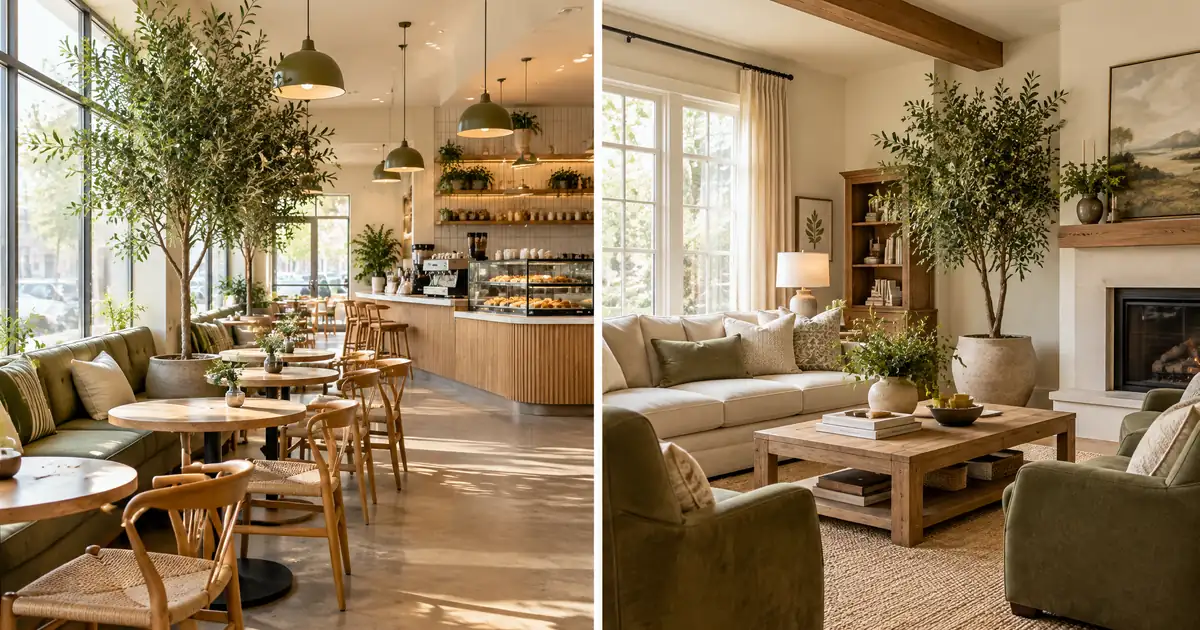
Professional stagers, short-term-rental hosts and café owners all arrive at the same conclusion within their first year: live plants and commercial spaces don't mix. A staging deadline, a back-to-back booking calendar, or a morning rush leaves no room for watering rounds, and one wilted plant undoes an otherwise perfect room. Here's the practical case for faux greenery in professional spaces, and how to use it well.
Home staging: sell the feeling, skip the maintenance
Staged homes sit on the market for weeks or months, often vacant, often without anyone visiting daily. Real plants would need a care rota; faux plants need nothing.
What stagers actually use
- A pair of matching trees by the front door or in the living room to frame the space symmetrically. Our Classic Porch Cedar Trees come as a pair for this reason.
- One tall anchor tree in the main living area to give buyers' eyes a resting point and make ceilings feel taller.
- Small greenery on kitchen counters, bathroom vanities and nightstands so every photo has life in it.
Because listing photos are the real product, consistency matters: a faux tree looks identical in the shoot, at the second showing and at the final walk-through.
Airbnbs and vacation rentals: greenery between guests
Rental hosts juggle turnover days, remote lockboxes and guests who may or may not water anything. A real plant in an Airbnb is either a chore for your cleaner or a casualty of a long booking. Faux plants solve it completely:
- Zero upkeep between turnovers. A quick dust during cleaning is the entire maintenance plan.
- Pet-safe by nature. Guests travel with animals; an artificial Norfolk pine can't poison a curious dog.
- Allergy-friendly. Guests with pollen allergies notice greenery that doesn't trigger it, and reviews reflect it.
- Photo consistency. Your listing photos, taken once, stay accurate for years.
Hosts typically place one statement tree in the living area, small plants in bedrooms, and a fern or two in the bathroom. The Norfolk Pines suit bedrooms and shelves, while a 5ft cedar anchors the living room.
Cafés, restaurants and offices: durable ambience
Hospitality spaces need greenery that looks good under artificial light, survives cleaning crews, and never drops leaves into someone's latte. Faux trees and topiaries deliver the biophilic look with none of the horticulture payroll.
Placement that works commercially
- Entry framing: matching trees on either side of the door signal "welcome" before anyone reads the menu.
- Corner softening: tall greenery in the hard corners of dining rooms makes spaces feel warmer and less echoey.
- Between seating: plants create gentle separation without walls, which guests read as privacy.
The spiral topiaries suit formal entries, while the snow-kissed spruce carries seasonal décor through winter without a single needle on the floor.
Cleaning schedules for businesses
Commercial faux plants need a simple, assignable routine. For cafés and restaurants, fold dusting into the weekly deep-clean checklist; for rentals, add it to the turnover sheet; for offices, assign it to whoever handles the plantscaping or cleaning contract. The point is ownership: faux plants fail commercially not from wear but from being nobody's job. A one-line checklist item keeps them looking new for years.
Choosing plants for commercial spaces
A few practical rules for business buyers:
- Buy fewer, larger plants. One or two statement trees per room beat a scatter of small ones, and large pieces anchor photos better.
- Match the plant to the brand. Structured topiaries suit formal entries; soft cedars and ferns suit cozy cafés and homey rentals.
- Check dimensions, not photos. Commercial spaces run tall; verify ceiling clearance and door widths before ordering. Every Oliveanddew product page lists exact heights and pot sizes per variant.
- Order pairs for entries. Symmetry at the door is the highest-impact placement in any customer-facing space.
The business case in one paragraph
A one-time purchase of a few quality faux plants replaces an ongoing line item: plant replacement, plant-sitting, cleaner watering time, and the occasional dead-plant photo problem. For staging companies and rental operators managing multiple properties, the math compounds fast.
One more note for multi-property buyers: standardize. Picking one or two plant styles and repeating them across units or locations keeps costs predictable, makes replacement trivial, and gives your brand a consistent look in every photo guests and customers see.
Start with one space
Whether you're staging a listing, furnishing a rental or fitting out a café, begin with the single most photographed spot in the space and work outward. Browse the full collection to find the sizes and styles that fit, and reach out through our contact page if you want help choosing; we're happy to talk through a space before you spend a dollar.