Best Faux Plants for Low-Light Rooms, Offices and Bathrooms
November 11, 2026 · 782 words · low light, bathroom plants, office decor, artificial plants
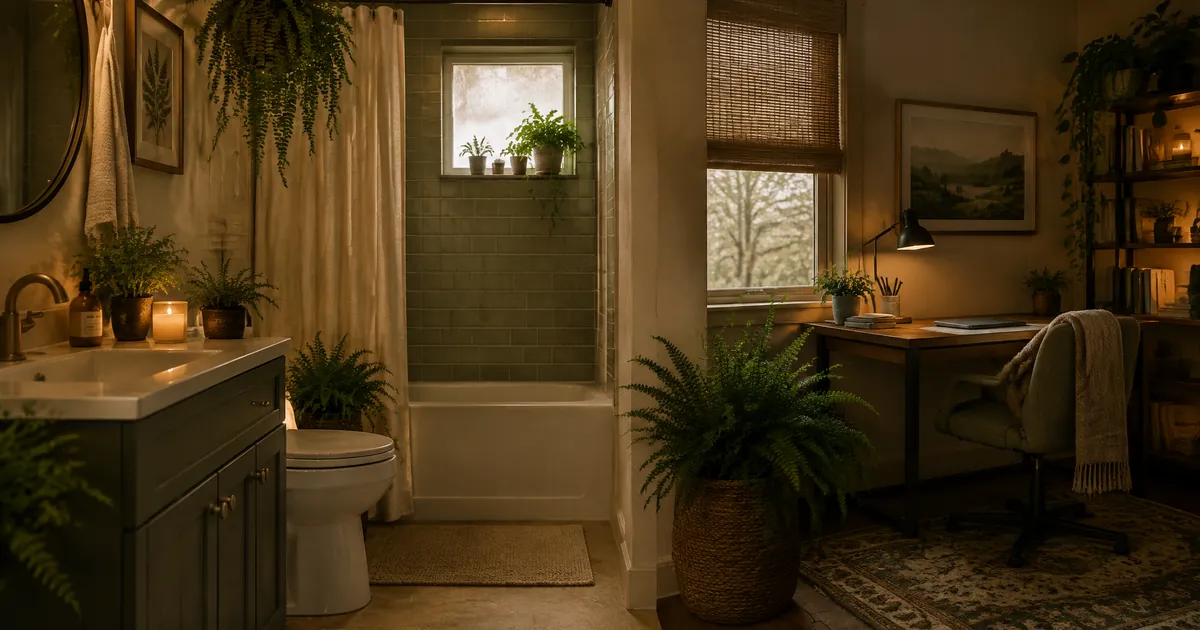
Every home has rooms where real plants go to die: the interior bathroom with one frosted window, the north-facing den, the office where the blinds stay closed all day. These are exactly the rooms where faux plants aren't a compromise; they're the only sensible option. Here's how to green up the darkest rooms in your home.
The good news: these rooms are where artificial plants look their best, because quality faux greenery has no light requirement at all and modern materials hold up in humidity that would rot a real fern.
Why low light kills real plants (and doesn't matter for faux)
Real plants need light for energy. In dim rooms they stretch, pale and drop leaves, and no amount of care fixes a fundamental energy shortage. Artificial plants have no such requirement, which flips the usual rule of plant styling: in dark rooms, you choose based purely on what looks best.
Bathrooms: humidity-proof greenery
Bathrooms are the classic case. Real ferns want the humidity but not the darkness; most real plants want neither. Faux plants don't care about steam, low light or temperature swings.
What works
- Small ferns and eucalyptus on the counter or toilet tank for softness around hard fixtures.
- A small pine or cypress on the windowsill if you have one; the 2ft Norfolk Pine fits most sills and adds a spa-like evergreen note.
- One statement plant in the corner of larger bathrooms, where a mid-height tree turns a plain bathroom into a designed one.
Wipe them down monthly as part of your normal bathroom clean; the steam does the rest.
Home offices: greenery that survives deadlines
The plant behind your desk appears in every video call, and a dead real plant in the background says more than any Zoom filter can hide. Faux options that work well:
- A medium tree behind or beside the desk to add depth to your camera background. The 3.9ft Soft-Touch Cypress & Cedar is sized for exactly this.
- Small potted plants on shelves to break up books and paperwork with green.
- Nothing trailing near your keyboard; keep work surfaces functional and put the greenery where the camera sees it.
North-facing rooms, hallways and dark corners
These are the spaces where faux greenery earns its keep. A dark corner that would need a grow light for anything real can carry a full-size tree with zero maintenance. Two approaches that work:
- The anchor tree: one tall plant, like a 5ft cedar topiary, to give the corner a silhouette. Add a picture light or nearby lamp aimed at it; lighting a plant makes it read as real regardless of the room's daylight.
- The layered grouping: a tree plus one or two smaller plants at different heights, which turns a dead corner into a styled vignette.
Rental units and shared spaces
Renters and roommates face a different constraint: you can't install grow lights, and your greenery has to survive moves, rearrangements and other people's habits. Faux plants weigh little, survive a moving box, and don't depend on whoever waters the apartment while you're away. A mid-height cypress in the living room and a couple of small pines on shelves green up a rental in one afternoon and leave with you on lease day.
Basements, rentals and windowless rooms
Gyms, guest rooms, basement lounges and interior hallways usually get written off entirely. A pair of matching plants, real or otherwise, is the difference between "unfinished" and "intentional." Because faux plants weigh little and ask nothing, they're also ideal for rentals where you'll take your greenery with you when you move.
Hotels, waiting rooms and other dim public spaces
The same logic that works for bathrooms works for any dim, low-traffic-care space: hotel corridors, reception desks, waiting rooms, stair landings. These are spots where a real plant would need someone assigned to it, and where a dead one is noticed by everyone who passes. Faux greenery with a monthly dusting keeps the space feeling maintained, which people read as a sign of everything else being well run.
One habit separates good low-light styling from great: light the plants you already have. A picture light, a table lamp or an uplight aimed at a faux tree gives it shadows and depth, and shadow is what makes foliage read as real. In a dark room, the lamp doing double duty is the cheapest styling tool there is.
The one rule for dark rooms
Since light doesn't constrain you, let the room's style choose the plant: structured topiaries for modern spaces, soft cedars and ferns for cozy ones. Browse the full collection, pick the shape your dark room is missing, and let it do the work the sun won't.